AI is about to give engineers far more designs than they can test. Testing and verification will become the new bottleneck. This makes the companies that own the verification stack more valuable.
The United States is leaning into AI and reindustrialization. Humanoid robots, advanced chips, and digital factories are moving into production. Each one is full of hard design problems. AI will help engineers explore solutions much faster, but every new design needs to be checked. More designs require more verification.
Verification is where ideas are tested against the laws of physics. Synopsys has long led in EDA, the software used to design and verify chips. Its acquisition of Ansys added a broad set of simulation tools for everything else: heat, structures, fluids, electromagnetics. Synopsys isn't the only one making this bet. Cadence and Siemens are assembling similar stacks. But Ansys was the largest independent simulation company and buying it gave Synopsys the broadest set of tools for testing both the chip and the product around it.
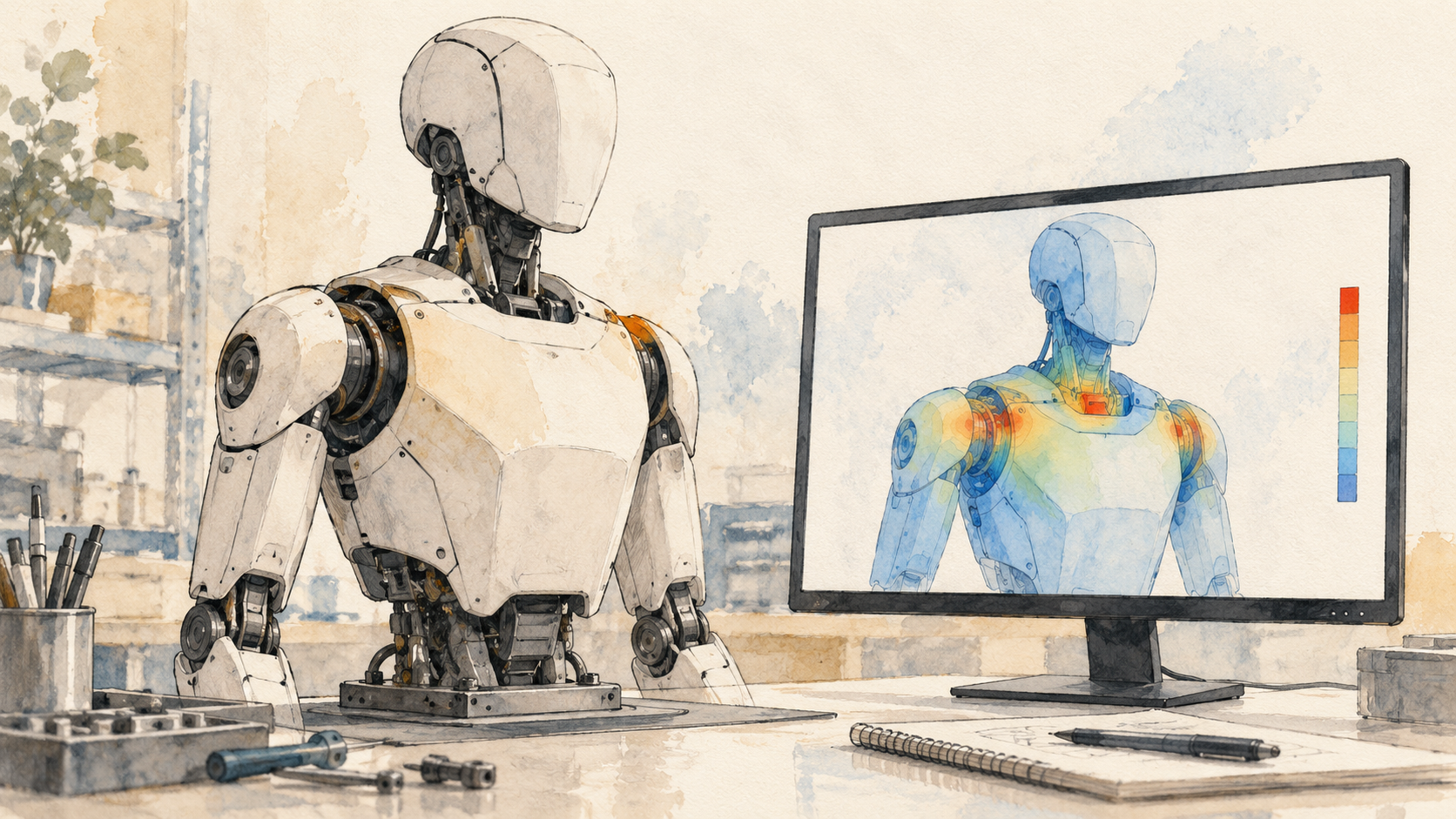
Take the computer inside a humanoid robot. A faster chip could help it respond quicker, but it generates more heat and drains the battery. EDA tools design the chip. Simulation tools test whether it can stay cool and reliable inside the robot. Bringing them together lets engineers balance these trade-offs as they design the product.
There have been claims that frontier models could eventually replace specialized simulation software. Analysts put this exact question to Synopsys recently. There was a similar fear earlier this year that models could make cybersecurity software less valuable. The opposite turned out to be true. AI has created more threats and surface area that need to be secured. Domain experts like CrowdStrike were best positioned to build AI into existing products. Engineering will go the same way. A model can propose a chip, but it cannot prove that it works. You need the solvers, models, and workflows that Synopsys offers.
Synopsys announced today that it would build GPT-Synopsys with OpenAI, a model that uses Synopsys tools to design chips, check results, and refine designs for engineer review. It will run on Synopsys’s new platform for long-running engineering agents. AI agents create more possibilities for engineers. The established verification stack still decides what will work.
AI will give us an unlimited number of things we could build. Simulation will decide which ones we should.